‘Addiction Is Not Only Caused by Weak Will’: How a Talking Pigeon Got Czechia to Face up to Its Alcohol Problem
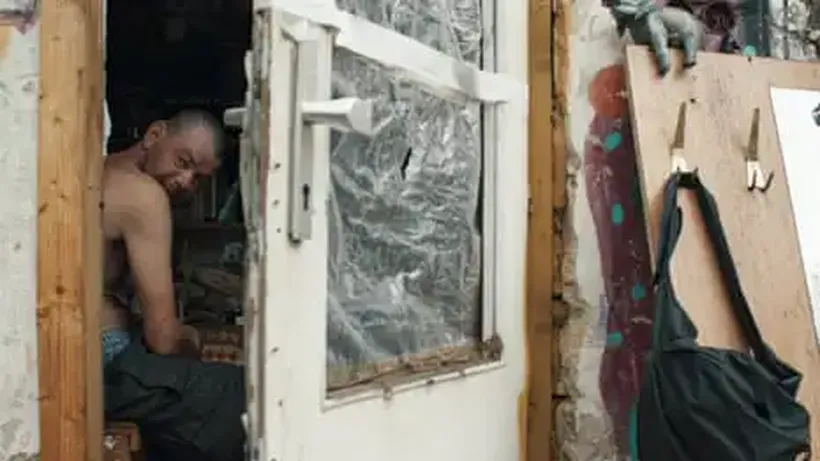
Czech film-maker Pepa Lubojacki originally set out to make a film about pigeons. What fascinated the 39-year-old director was that the grey birds are clearly beautiful and highly intelligent creatures, yet human cruelty towards them is socially acceptable in the way it isn’t towards, say, crows or magpies. “You can spot kids kicking and chasing pigeons while their parents cheerfully look on,” she says.
The moral blind spot reminded her of the way that people looked at homeless people like her older brother and her cousins. “The public has learned to avert their eyes,” she says. “My cousin was declined care seven times with open wounds in the hospital, and finally, they had to amputate both of his legs.”
The birds stayed in the title of her first documentary, one of the most widely discussed and critically lauded films to be released in Czechia in recent years. To make If Pigeons Turned to Gold, Lubojacki spent five years chronicling the lives of four family members on the streets of Prague. In search of answers for why her relatives ended up with addictions and without roofs over their heads, the film wades deep into intergenerational trauma: domestic abuse and the deaths of her biological father and stepfather.
Shot mostly on iPhone, the film is narrated by a meme-like talking pigeon and animated family photos with AI voiceovers, including manipulated child portraits of Pepa and her brother. They provide flashbacks to their 90s childhood in prefab estates where “you could get all the drugs your heart desired”, as one of the opening scenes tells us.
The central focus is Lubojacki’s ever-evasive brother David, and the documentary includes peaceful moments of nostalgic bonding over a rap song, but also documents vicious cycles of alcohol withdrawal and relapse, as Lubojacki struggles to nurture adult David to functionality. It’s an especially pressing issue in Czechia, the home of the world’s most popular beer style in the pilsner, where taxation of alcoholic drinks is traditionally low and the rate of alcohol consumption one of the highest in the world. (To make things worse, Prague has some of the lowest rates of affordable housing in the European Union.)
“I was angry because of the systemic injustice,” Lubojacki says. “Police beat up my brother several times, but caring professions can cause violence too, when medical personnel refuse to treat unhoused persons like him because of their history of addiction.” She used to look up to David – a local skater hero who listened to hip-hop, and knew all the cool stuff – and the mission of her film is audiences can “see my brother how I see him and how beautiful he is, that addiction is not only caused by a weak will”.
If Pigeons Turned to Gold unfolds through diary entries, interspersed with footage of herself on the psychiatric ward where she was hospitalised during the making of the film and video-art sequences of her sinking deep in water. Some of the entries read like poetry: “I’m just a little strawberry seed in the sea, a drowned strawberry seed, in an attempt to change something that is not up to me to change.”
“Written text is my primary language and is closer to my heart,” reveals Lubojacki, who also has ambitions as a writer. She was inspired by Ottessa Moshfegh, who writes “simply, almost mechanically, as if without emotions, and observes brutal things without pathos”, and Melissa Broder’s “loose narrative of free writing” on addiction.
The central question the 110-minute film circles around is whether you can grieve someone who hasn’t died yet. According to one recent study, people sleeping rough on the streets die 16 years earlier than the rest of the population. “I believe we live in an epidemic of addiction,” Lubojacki says. But speaking about this epidemic without shame is difficult: “When I grew up, I felt isolated, as if I was the only one who had this problem – I couldn’t speak about it with anyone, as I was so ashamed.”
Relatives of people with addictions often suffer from a secondary trauma, as Barbora Bírová of Czech advocacy organisation Platform for Social Housing points out. “If we understand homelessness as a situation, not as inner personal characteristics, it opens the way to solutions.”
Lubojacki had feared rejection, but instead she received acclaim. What began as a student film has already won international recognition on the European film festival circuit. In February, it received the Berlin film festival’s documentary award for “remarkable achievement in recruiting documentary into sustained practice of radical empathy”; at the Karlovy Vary film festival in July, it received a five-minute standing ovation; last month, it was selected as the Czech Republic’s official submission for the 99th Oscars in the International Feature Film category.
Hundreds of people have got in touch with Lubojacki to share similar family stories. In her film, pigeons won’t turn to gold or even silver because they are what they are: Lubojacki herself undergoes transformation over the course of the film, from moralising her brother “why don’t you do it for me or mom?” to understanding and acceptance. “Since I understood what was going in his brain, and how I should respond, we have the best relationship we ever had.” Lubojacki’s empathy gives her hope that people like her brother matter. “We learned to avert our eyes but if one breaks the silence, others will follow.”